

In today’s fast-paced learning environment, time management is one of the most essential skills students can develop. With mounting academic demands, online classes, homework, and extracurricular activities, it’s easy for students to feel overwhelmed. Learning how to plan and allocate time effectively is no longer optional—it’s a skill that shapes academic performance, personal growth, and long-term success.
At Edural Classes, we emphasize that mastering time management goes beyond simply finishing tasks. It is about enhancing focus, improving learning outcomes, reducing stress, and building habits that support lifelong success.
Why Time Management Matters
Students who manage their time effectively often experience:
-
Higher academic performance – completing assignments with quality and punctuality.
-
Efficient completion of projects – balancing multiple subjects or tasks without last-minute pressure.
-
Reduced stress and anxiety – feeling in control of responsibilities rather than overwhelmed.
-
Stronger self-discipline and independence – developing habits that carry into higher education and careers.
Effective time management allows students to set priorities, focus on essential learning objectives, and maintain balance between school, personal interests, and rest.
Key Challenges in Students’ Time Management
Even with motivation, students often face obstacles:
-
Overloaded schedules – juggling school, coaching classes, sports, and hobbies.
-
Procrastination – delaying tasks reduces both quality and learning retention.
-
Digital distractions – social media, games, and notifications can consume study hours unnoticed.
-
Lack of structured planning – unclear goals and unorganized schedules make it hard to track progress.
Recognizing these challenges is the first step toward developing effective strategies.
Strategies for Effective Time Management
1. Prioritization of Tasks
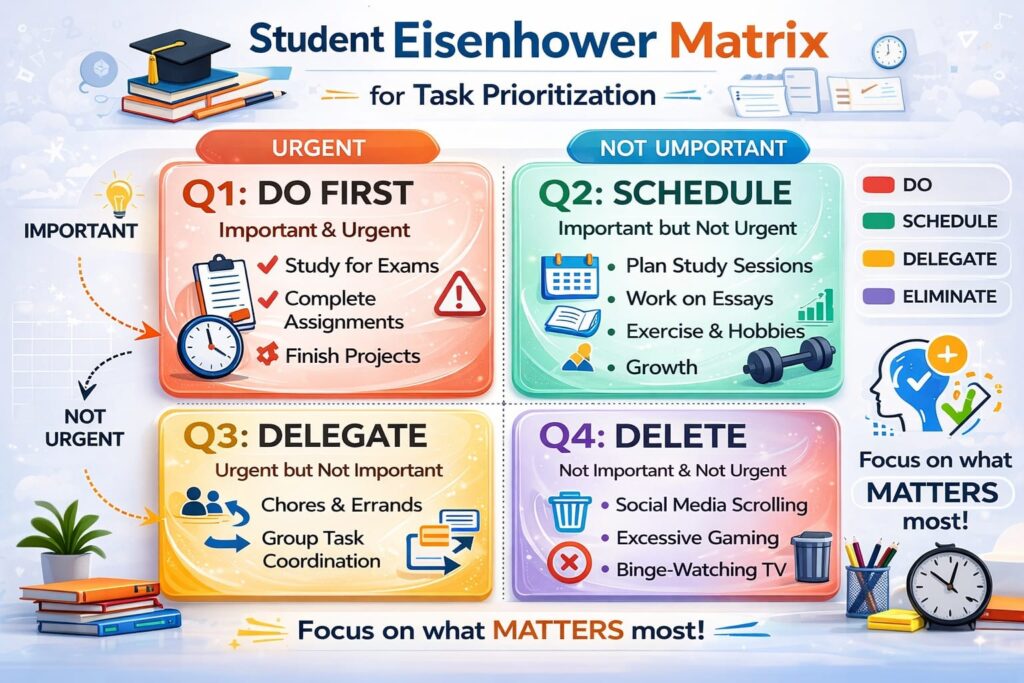
Not all tasks carry the same importance. Students should distinguish between urgent, important, and less critical tasks. Using tools like the Eisenhower Matrix, they can focus energy on what truly impacts learning outcomes and reduce time wasted on lower-priority activities.
2. Structured Scheduling
Creating a daily and weekly schedule helps students allocate time for study, revision, practice, and leisure. Techniques like time-blocking assign dedicated periods for each activity, ensuring a balanced approach that prevents burnout.
3. Goal-Oriented Planning
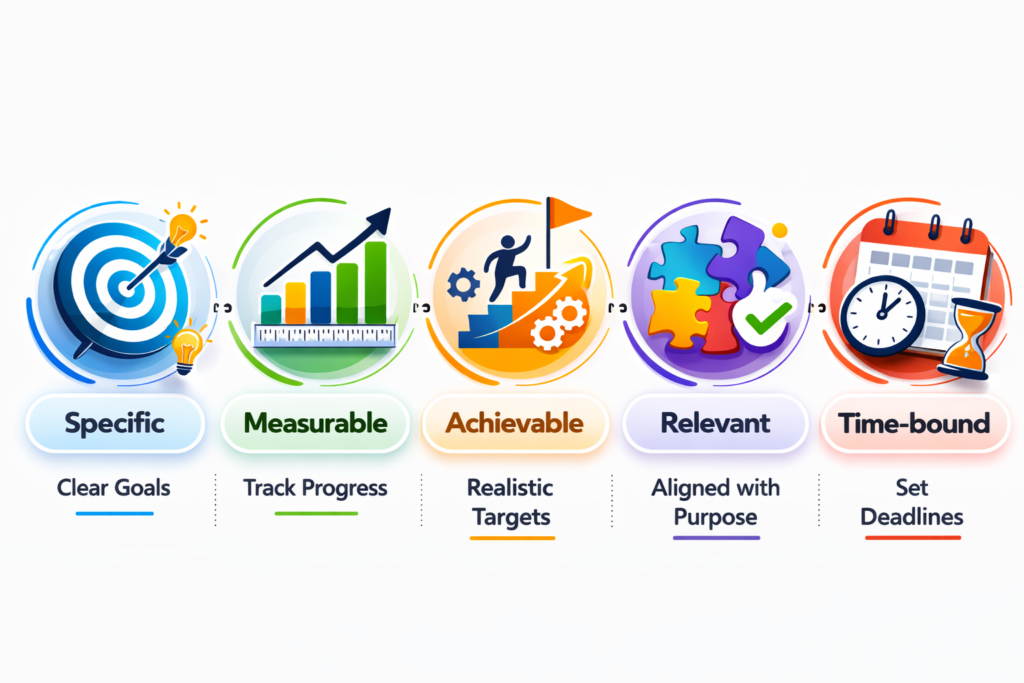
Setting SMART goals (Specific, Measurable, Achievable, Relevant, Time-bound) gives students a clear roadmap. This approach ensures focus, tracks progress, and creates small, achievable milestones that boost confidence and motivation.
4. Guided Learning Support
Structured guidance can greatly improve study efficiency. With proper resources, students can:
-
Follow well-organized study plans
-
Engage in interactive exercises to reinforce learning
-
Track progress and improvement over time
-
Adapt learning pace to personal strengths and needs
These strategies ensure that students make the most of each study session and maintain steady academic growth.
5. Regular Review and Adjustment
Weekly reviews are essential. Students should reflect on:
-
Which tasks were completed successfully
-
Areas where time was insufficient or ineffective
-
Adjustments needed to optimize the next week’s schedule
This cycle of review, adjust, and improve helps students stay on track and avoid last-minute stress before exams or deadlines.
Conclusion
Time management is more than a skill—it’s a foundation for academic success and lifelong learning. Students who cultivate strong time management habits can enhance study efficiency, reduce stress, and achieve consistent results.
With Edural Classes, educators provide guidance that helps students structure their learning, focus on priorities, and maximize every study hour.
Time is finite, but effective management transforms it into a powerful tool for learning, growth, and success.